There is something about the first month of school that feels like controlled chaos. You are learning names, establishing routines, answering parent emails, collecting forms, organizing supplies, all while working to build a foundation for the rest of the year. It is exciting, but it is also intense. That is why putting some classroom organization elements in place before the first day of school matters so much.
When your classroom is organized from the beginning, the first month feels calmer. Students feel more secure because routines are predictable. You feel more confident because materials and systems have a clear home. And instead of reacting to every little hiccup, you are leading with intention. Let’s look at the key pieces of classroom organization that make the biggest difference before the first bell rings.
Organize Your Classroom Paperwork Before Students Arrive
The first week of school moves fast. While you are greeting students, teaching procedures, and building relationships, paperwork is already coming at you from every direction. Transportation changes, parent contact updates, medical notes, and student information sheets. If you do not have a system ready, those small pieces of information quickly become sticky notes, random scraps of paper, or emails you promise to handle later.

Instead of reacting to paperwork as it comes in, set up your tracking system before students arrive. Start by deciding where your “command center” will live. Some teachers prefer a printed teacher binder with clearly labeled sections. Others prefer digital folders organized by category. Either way, create dedicated sections for the essentials: class list, parent contact information, transportation, student data, attendance, and passwords. When each category has a clear home, you eliminate the daily question of, “Where should I write this down?”

For example, during the first week, transportation changes are common. If you already have a transportation tracking form ready, you simply update it. You are not scrambling to remember who rides the bus, who goes to after-school care, and who is picked up by a grandparent on Wednesdays. The same goes for parent contact information. Having a structured form allows you to verify details quickly and keep everything in one place instead of digging through enrollment packets.
Checklists are another powerful piece of classroom organization during back to school. Create a master checklist for required forms, fees, or assignments. As items are returned, you mark them off. That visual progress helps you see at a glance who still needs a reminder. It prevents last-minute surprises and keeps communication clear.

The goal here is not to create more paperwork. It is to create clarity. When you have pre-built forms and checklists ready to go, the first month feels organized instead of overwhelming. You are not inventing systems while trying to learn 25 new names. You are simply filling in information within a structure that already exists.
That is classroom organization in action.
Organize Your Planning Binder Before the First Week
Back-to-school classroom organization is incomplete without a clear place for lesson plans, pacing guides, and planning materials. When you sit down to plan, you should not be hunting for last year’s unit outline or trying to remember where you stored your curriculum map. Nobody’s got time for that! Teacher planning binder to the rescue.

The first month of school moves quickly, and your planning time is limited. If your materials are scattered between last year’s folders, random sticky notes, and a half-updated digital document, planning becomes frustrating instead of productive. A well-organized planning binder creates one central location for everything related to instruction. It becomes your command center. When lesson plans, calendars, pacing guides, and notes all live in one place, you eliminate wasted time and reduce mental clutter.

This kind of classroom organization does more than keep papers neat. It protects your planning time and creates consistency. When your weekly lesson plan layout stays the same, you are not redesigning formats each time you plan. You are simply filling in the boxes. Editable planning templates make that consistency even easier. Whether you teach five subjects or six, a structured layout keeps plans from feeling scattered. Features like automatic text resizing prevent formatting frustration and keep pages clean and aligned, even when your lesson descriptions run long. Add in labeled binder covers, section dividers, and curriculum pacing guides, and you have a clear roadmap for the year.
Some teachers prefer to keep everything digital. Others love a printed binder they can hold in their hands. The beauty of an organized planning system is that it works either way. The structure stays consistent. The decisions are already made. And that is what makes classroom organization powerful before the first week even begins.
For more tips on organizing your instruction and planning, make sure to read this post!
Organize Important Information with a Back-to-School Flipbook
After setting up the systems that support you behind the scenes, the next step in classroom organization is organizing how key information is shared with families. The first week of school often comes with multiple handouts, reminders, and procedural explanations. When that information is scattered across separate pages, it can easily get lost or overlooked.

A back-to-school flipbook solves that problem by consolidating key details into one structured format. Instead of sending home several disconnected papers, you provide families with a single resource that includes classroom routines, supply expectations, communication procedures, and other essential information. Everything is organized under clearly labeled tabs, making it easy for parents to reference later.
This is especially helpful during the first month when questions naturally arise. Instead of rewriting the same explanations in emails, you can refer families back to the flipbook. It becomes a consistent point of reference rather than a one-time handout that disappears into a backpack.
The beauty of using an editable flipbook template is that the structure is already built. You customize the content to match your classroom, print or share it digitally, and you are done. You are not formatting layouts or trying to design something from scratch. You are simply filling in the details. That level of classroom organization not only helps parents stay informed, but it also lays the foundation of communication for the entire school year.
Keep Everyone on the Same Page with Daily Agenda Slides
While the flipbook organizes information for families, daily agenda slides organize the flow of your classroom. They help to keep you and your students on the same page with events and expectations.
Students function best when they know what to expect. During the first few weeks, you are teaching procedures as much as academic content. When the daily schedule is clearly displayed, transitions become smoother, and behavior improves because students can anticipate what is coming next. Not only does this help students learn the flow of their new classroom, but it also helps them to feel supported in their new school environment.

Whether you outline subjects, learning targets, homework, or reminders, daily agenda slides help students settle into a routine quickly. You are not explaining the structure of the day over and over again. It is displayed and predictable. Over time, this becomes part of your classroom rhythm. Students walk in and immediately look at the board. They know how the day will unfold. That predictability reduces off-task behavior, supports smoother transitions, and helps to build student independence and organization skills. These are all great results, especially during the first month when routines are still forming.
From an organizational standpoint, agenda templates save time because you are not recreating your daily outline every morning. The sections are already in place. You update the content, not the design. Whether you use seasonal themes or a consistent layout, the structure supports you instead of adding another decision to your already busy morning routine.
Pull It All Together with One Classroom Organization System
When you look at each piece individually, it might not seem like much. But when those pieces are designed to work together, classroom organization stops feeling like extra work and starts feeling like support.
The real power comes from having everything in one coordinated system. Your forms support your day-to-day needs. Your pacing guides live in the same place as your lesson plans. Your flipbook aligns with your communication tools. Your agenda slides reinforce the routines you introduced from day one. Instead of juggling disconnected files and templates, you are working within one organized framework.

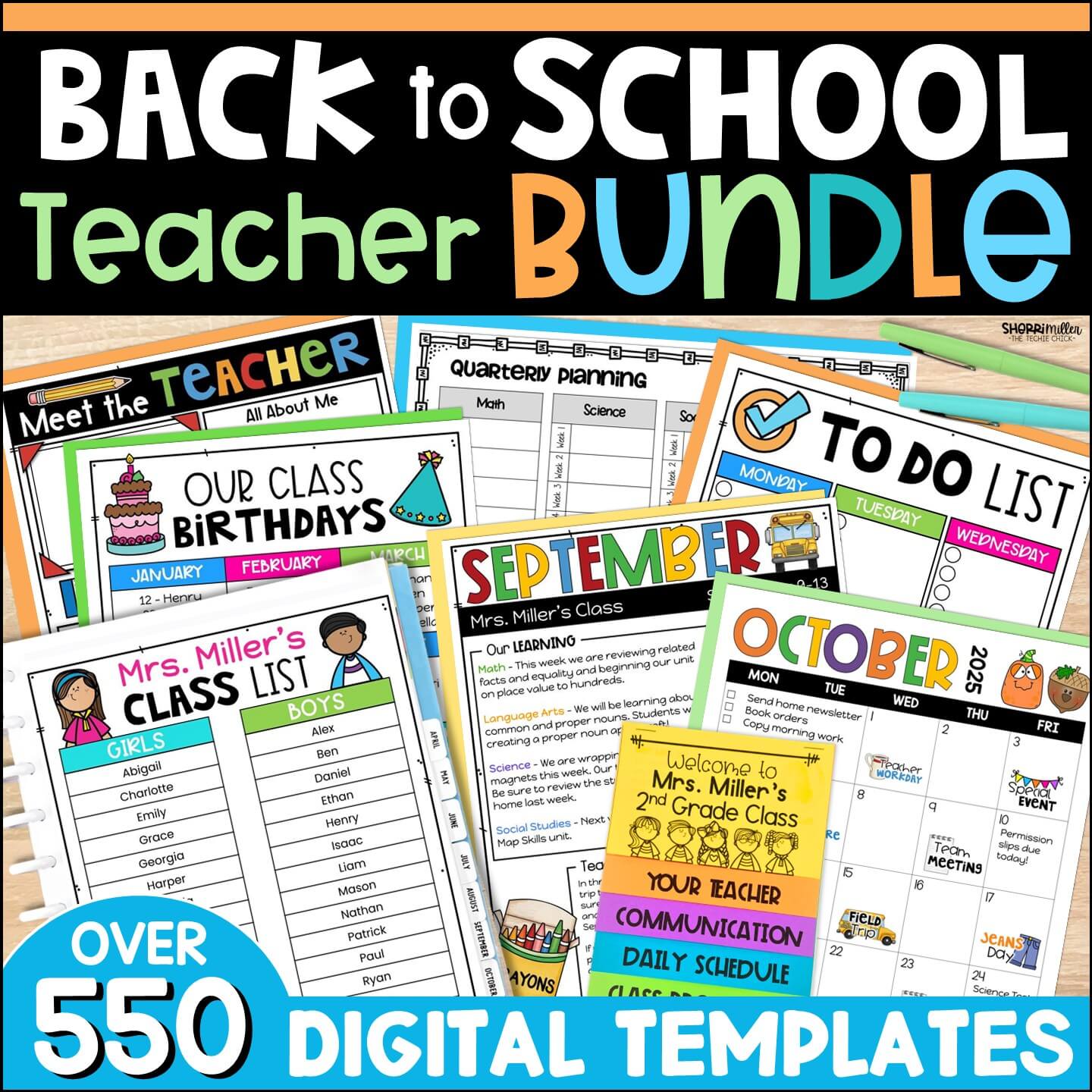
That is why a complete back-to-school teacher bundle can make such a difference. Instead of piecing together forms, checklists, planner pages, calendars, pacing guides, and agenda templates from different places, you can set up your classroom organization all at once. Everything is editable, flexible, and ready to customize to your needs, whether you prefer digital planning or a printed teacher binder.
The first month of school will always be busy. But it does not have to feel chaotic. When your classroom organization is built before students arrive, you walk into that first week prepared. You know where information lives. You know how your day flows. You know how your planning fits together.
And when those systems are already in place, you get to focus on what matters most: your students.
Frequently Asked Questions About Classroom Organization
When should I start setting up my classroom organization systems?
The best time to focus on classroom organization is before students walk through the door. Even if you only prepare your forms, planner, and daily agenda structure, having those systems ready will make the first month feel far less overwhelming. You can always adjust as the year unfolds, but it is much easier to tweak an existing system than to build one in the middle of back-to-school chaos.
Do I have to use digital tools for classroom organization?
Not at all. Strong classroom organization works whether you prefer digital planning or a printed teacher binder. Editable templates simply make it easier to customize and reuse materials each year. Some teachers love typing and sharing digitally. Others prefer printing and writing by hand. The key is consistency, not format.
What should be in a teacher planning binder?
A well-organized teacher binder typically includes weekly lesson plans, curriculum pacing guides, a year-at-a-glance calendar, class lists, checklists, and important forms. When those pieces are clearly labeled and easy to access, planning becomes faster and more focused. Classroom organization at this level supports both daily instruction and long-term pacing.
How do agenda slides improve classroom organization?
Agenda slides create structure and predictability. When students can see the schedule and expectations for the day, transitions run more smoothly, and behavior improves. Instead of repeatedly explaining what comes next, the plan is already visible. That clarity supports classroom organization for both teachers and students.
Save These Classroom Organization Tips
If you are getting ready for back to school, save this post to your favorite classroom organization Pinterest board so you can come back to it while setting up your teacher binder and systems. A little preparation now can make the entire first month smoother and far less stressful.